
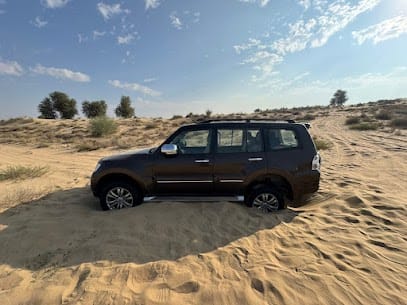
A car stuck in sand Dubai is one of the most common off-road emergencies in the UAE. Every weekend, hundreds of drivers head into the desert for dune bashing, camping trips, and off-road adventures, and every weekend, a significant number of them end up buried in soft sand with wheels spinning and no traction. It happens to experienced off-roaders and first-time visitors alike. Dubai’s desert terrain is unforgiving, the summer heat adds urgency to every minute spent stranded, and the wrong response can push the vehicle deeper into the sand and cause serious mechanical damage.
This guide explains exactly why a car gets stuck in sand Dubai, what the most common mistakes are, and how professional 24/7 desert pull-out recovery works from the moment you call.
Why a Car Gets Stuck in Sand Dubai
Sand driving requires a completely different technique from road driving, and the gap between the two is where most vehicles end up stranded. Soft desert sand, particularly in areas like Al Qudra, Lahbab, and the dunes surrounding Dubai, has almost no load-bearing capacity at standard tyre pressures. A vehicle approaching a dune at road tyre pressure will cut through the surface rather than float on top of it, causing the wheels to dig in and lose traction almost immediately.
The most dangerous error a driver can make with a car stuck in sand Dubai is to keep accelerating. Inexperienced drivers who accelerate harder when the wheels begin to spin make the situation significantly worse. Aggressive throttle input on a car stuck in sand Dubai causes the tyres to dig deeper into the sand, lowering the vehicle’s undercarriage onto the surface and making extraction far more difficult. Choosing the wrong line on a dune, stopping halfway up a slope, or attempting to navigate through soft terrain in a 2WD vehicle are among the most frequent causes of a car stuck in sand Dubai that requires professional recovery.
The Biggest Mistakes to Avoid When Car Stuck in Sand Dubai
The first and most damaging mistake is continued wheel-spinning. Every second, the wheels spin without traction in soft sand, digging the vehicle deeper and burying the axles, sidesteps, and underbody further into the ground. Engine overheating is a direct risk when a car stuck in sand Dubai continues running at high throttle in temperatures that regularly exceed 45°C in summer. If the temperature gauge rises, stop immediately engine damage from overheating in a desert recovery situation costs far more than the pull-out service itself.
Attempting to rock the vehicle back and forth can work in shallow sand but creates serious drivetrain and gearbox stress when applied to a vehicle that is deeply buried. Asking other desert drivers to tow using basic ropes or straps attached to unsuitable anchor points risks snapping the strap under load, which can cause serious injury, as well as causing bumper and chassis damage to both vehicles involved. Professional recovery equipment, operated by a trained specialist, is always the correct answer when basic self-recovery attempts have failed. Every failed amateur tow attempt makes a car stuck in sand Dubai harder and more expensive to recover professionally.
What to Do When Your Car Is Stuck in Sand Dubai
Step 1: Stop All Wheel-Spinning Immediately
The moment traction is lost, release the accelerator completely. Continued wheel-spinning is the single action that most consistently worsens a car stuck in sand Dubai situation. Switch off the engine if the temperature gauge is rising and allow the vehicle to cool before any further attempts. This is the single most important rule for any car stuck in sand Dubai.
Step 2: Assess the Situation Calmly
Check how deeply the vehicle is buried. If only the tyres have lost traction on the surface, deflating them to around 15 to 20 PSI increases the footprint of the tyre and can restore enough traction for a gentle forward or backward exit. If the undercarriage is resting on the sand surface, self-recovery without specialist equipment is unlikely to succeed and risks further damage to the vehicle. Recognising the depth of burial is the key to deciding whether to attempt self-recovery or call for help immediately when you have a car stuck in sand Dubai.
Step 3: Use Recovery Aids If Available
Sand ladders, traction boards, or any firm flat surface placed under the drive wheels can create enough grip for a slow, controlled exit. Deflate the tyres first, place the boards as far under the driven wheels as possible, and apply gentle progressive throttle, never aggressive acceleration. If the vehicle does not move freely within the first attempt, stop and call for professional help. If the vehicle does not move freely on the first attempt, every additional try risks making a car stuck in sand Dubai significantly harder to extract.
Step 4: Call a Licensed 24/7 Desert Recovery Service
Contact a certified desert recovery provider and share your live GPS coordinates via WhatsApp. In Dubai’s desert areas, GPS accuracy is essential for fast response — landmarks are sparse, and many popular off-road zones look identical from the ground. A specialist 4×4 recovery vehicle equipped with winches, sand ladders, and traction aids will be dispatched immediately. Response time to most Dubai desert areas is between 30 and 60 minutes, depending on your exact location. For full details on TRT Recovery’s sand and desert pull-out service across Dubai and the UAE, visit the dedicated service page.
How Professional Desert Pull-Out Recovery Works in Dubai
When a specialist recovery team arrives at a car stuck in sand Dubai, the first step is always a terrain assessment before any equipment is deployed. The technician evaluates the depth of burial, the sand conditions, the angle of the vehicle, and the safest extraction direction. Attempting to pull a deeply buried vehicle in the wrong direction can cause frame stress and damage to the drivetrain.
Professional recovery uses heavy-duty winches anchored to the recovery vehicle, with rated recovery straps attached to the correct tow points on the stuck vehicle. Traction boards are positioned to support the tyres as the vehicle is winched free. Tyre pressure is managed throughout the process to ensure the vehicle can roll out on the desert surface once free. Once the car is out of the sand, a full check of tyres, underbody, and drivetrain is conducted before the driver continues. If the vehicle has sustained mechanical damage during the incident, TRT Recovery’s 24/7 flatbed towing team can transport it safely to your chosen garage anywhere in Dubai or the UAE.
Every car stuck in sand Dubai is assessed individually because no two extraction situations are identical.
What the Dubai RTA Says About Desert Driving Safety
According to the Dubai Roads and Transport Authority (RTA), drivers venturing into desert areas should always carry recovery equipment, inform someone of their route and expected return time, and use licensed recovery providers when professional assistance is required. Attempting self-recovery without proper equipment in remote desert areas puts both driver and vehicle at serious risk, particularly in summer when dehydration and heat exhaustion can become life-threatening within hours. Following these guidelines is especially important given how quickly conditions can deteriorate when you have a car stuck in sand Dubai in extreme summer temperatures.
Conclusion
A car stuck in sand Dubai is a situation that resolves quickly with the right response. Every car stuck in sand Dubai responds differently: stop all wheel-spinning, assess the depth of burial calmly, attempt basic self-recovery only if the vehicle is shallowly stuck, and call a certified 24/7 desert recovery specialist if initial attempts fail. With the correct equipment and experienced operators, any vehicle can be safely extracted from Dubai’s desert terrain without lasting damage.
📞 Need help right now? Call or WhatsApp TRT Recovery at +971 50 791 3692, available 24/7 across all of Dubai and the UAE.