
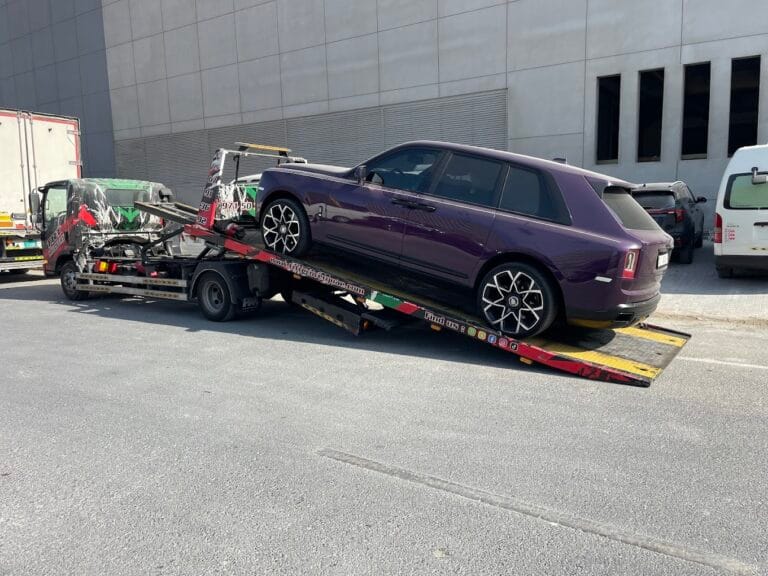
A car breakdown Dubai can happen to any driver at any moment. One minute you are on Al Khail Road during rush hour, the next the engine cuts out, and you are stranded in 45°C heat with traffic flying past. Dubai’s extreme climate, fast highways, and constant stop-and-go traffic make vehicle breakdowns more common here than in almost any other city in the world. Knowing exactly what to do in those first few minutes protects you, your passengers, and every driver around you.
This guide covers every step to take when you experience a car breakdown Dubai, the most common causes, and how professional 24/7 roadside assistance works from the moment you call.
The Most Common Causes of a Car Breakdown Dubai
Understanding why breakdowns happen in Dubai helps drivers take preventive action before they find themselves stranded. The city’s extreme summer heat is the single biggest contributing factor. Temperatures that regularly exceed 45°C accelerate battery degradation, cause tyre pressure fluctuations, overheat cooling systems, and put enormous stress on engine components that manufacturers typically test in far cooler conditions.
A dead car battery is the most frequent cause of a car breakdown Dubai, typically affecting vehicles whose batteries are more than two years old. Tyre punctures are the second most common cause, driven by sharp construction debris scattered across roads and slip roads throughout the city. Engine overheating, fuel exhaustion, and electrical system failures account for the majority of remaining breakdowns. For drivers who use their vehicles for short trips repeatedly without allowing the alternator to fully recharge the battery, a sudden breakdown is simply a matter of time.
What to Do Immediately During a Car Breakdown Dubai
Step 1: Activate Your Hazard Lights Immediately
The moment you sense something is wrong, unusual sounds, warning lights, loss of power — switch on your hazard lights before anything else. On Dubai’s high-speed highways, making yourself visible to other drivers is the single most important action you can take in the first seconds of a car breakdown Dubai.
Step 2: Move to Safety
If the vehicle is still moving, steer calmly toward the nearest hard shoulder, emergency lane, or safe parking area. Do not brake suddenly. Use whatever momentum remains to get as far off the live road as possible before the vehicle comes to a complete stop. Engage the handbrake once stationary.
Step 3: Stay Inside on Fast Roads
On Dubai’s highways, stay inside the vehicle with your seatbelt fastened until help arrives. Standing on the roadside or behind the vehicle puts you at serious risk from passing traffic. If you are in a parking area or a quiet side street, it is safe to wait outside at a comfortable distance from the vehicle.
Step 4: Assess Without Taking Risks
Check if the cause of the car breakdown Dubai is immediately obvious — a warning light, a flat tyre, or smoke from the engine. If you are unsure what caused the failure, do not attempt to fix it yourself. Pushing the vehicle, manually releasing the gearbox, or attempting amateur repairs on a live road creates additional risk and can turn a minor breakdown into a major one.
Step 5: Call a Licensed 24/7 Roadside Assistance Provider
Contact a certified roadside assistance provider and share your live GPS location via WhatsApp. A trained technician will be dispatched immediately. In most areas of Dubai, response time is between 20 and 45 minutes, depending on your exact location and traffic conditions. For full details on TRT Recovery’s 24/7 roadside assistance service across Dubai, visit the dedicated service page.
What Roadside Assistance Covers During a Car Breakdown Dubai
Professional roadside assistance in Dubai covers a wide range of breakdown scenarios that go far beyond simple towing. A certified technician arriving at a car breakdown Dubai can typically handle battery jump-starts and on-site replacements, emergency tyre changes and flat tyre assistance, emergency fuel delivery for vehicles that have run out of petrol or diesel, car lockout assistance for drivers with keys locked inside the vehicle, and basic on-site diagnostic checks to identify the cause of the failure before deciding whether the vehicle needs to be towed.
If the vehicle cannot be repaired on-site and needs to be transported, TRT Recovery’s 24/7 towing and vehicle recovery team can arrange safe transport to your chosen garage, dealership, or home address anywhere across Dubai and the UAE.
Car Breakdown Dubai on a Highway: Special Considerations
A car breakdown Dubai on a major highway like Sheikh Zayed Road, Al Khail Road, or Emirates Road requires additional caution. The Dubai Roads and Transport Authority strictly prohibits pedestrians on fast roads, meaning you must remain inside or immediately adjacent to your vehicle at all times. Never cross live lanes to reach an emergency telephone or service area. Place a warning triangle at least 50 metres behind the vehicle if it is safe to do so, and keep your hazard lights activated at all times until help arrives.
What the Dubai RTA Says About Vehicle Breakdowns
According to the Dubai Roads and Transport Authority (RTA), drivers who experience a car breakdown Dubai on a public road must move the vehicle to a safe position immediately, activate hazard lights, and contact a licensed roadside assistance provider. Using unlicensed or uninsured operators for vehicle recovery is non-compliant with Dubai’s road safety regulations and can result in additional liability for the driver.
Conclusion
A car breakdown Dubai is stressful, but always manageable when you know exactly what to do. Stay calm, move to safety, switch on your hazard lights, and call a certified 24/7 roadside assistance provider. Whether it is a dead battery, a tyre puncture, an empty fuel tank, or a mechanical failure, a professional recovery team can reach you anywhere in Dubai and resolve the situation quickly and safely.
📞 Need help right now? Call or WhatsApp TRT Recovery at +971 50 791 3692, available 24/7 across all of Dubai and the UAE.